
Multisyllable Words for Speech Therapy
Multisyllable words play a critical role in speech therapy because they place greater demands on motor planning, sequencing, prosody, and phonological organization than single-syllable words.
For many children with speech sound disorders, accuracy may appear strong at the word or syllable level—but break down as words become longer and more complex. This page explains why multisyllable words are challenging and how they can be used effectively in therapy.

What Are Multisyllable Words?
Multisyllable words are words that contain two or more syllables, ranging from relatively simple (e.g., table) to highly complex (e.g., hippopotamus).
As syllable count increases, so do the demands on:
- motor planning and sequencing
- timing and coordination
- stress and rhythm within words
- consistency of sound production
Why Multisyllable Words Are Difficult
Motor Speech Disorders
Children with motor planning difficulties often struggle as word length increases.
Common contributing factors include:
- Increased motor planning demands for longer utterances
- Difficulty sequencing articulatory movements across syllables
- Reduced accuracy as transitions between syllables increase
- Challenges maintaining appropriate stress patterns within words
As words become longer, the margin for error narrows—and breakdowns become more noticeable.
Articulation and Phonological Speech Sound Disorders
Children with articulation (phonetic) or phonological (phonemic) disorders may also demonstrate reduced accuracy with multisyllable words, but for different reasons.
Rather than difficulty planning movement, these children often struggle to:
- maintain accurate sound production across longer words
- apply learned sound patterns consistently as complexity increases
Example:
A child who produces /d/ accurately in short words (e.g., day, add) may show reduced accuracy in longer words due to increased linguistic and motor demands.
Phonological Disorders and Weak Syllable Deletion
Phonological disorders involve difficulty organizing speech sounds into the correct patterns or rules of the language.
One error pattern that commonly affects multisyllable words is weak syllable deletion, where an unstressed syllable is omitted.
Examples:
- banana → nana
- elephant → efant
Multisyllable words provide natural, functional opportunities to target:
- syllable awareness
- stress patterns
- rhythm and timing within words
Why Multisyllable Words Matter in Therapy
Working with multisyllable words allows clinicians to:
- assess true speech stability beyond simple word levels
- identify breakdowns in sequencing, stress, and consistency
- support generalization to conversational speech
- address patterns that may not appear in shorter targets
They are especially valuable when transitioning from structured practice to functional communication.
Therapy Approach for Multisyllable Words
My materials and therapy framework follow a progressive learning model:
1. Explicit Teaching
- Direct instruction and drill
- Heavy use of visual, verbal, and tactile cues
- Clear focus on syllable structure and stress
2. Increased Difficulty
- Gradual fading of cues
- Longer words and sentences
- Increased linguistic load
3. Implicit Teaching and Generalization
- Games and language-based tasks
- Practice with distractions
- Functional use across activities
This progression supports both accuracy and carryover.
Multisyllable Word Materials
After reviewing how often multisyllable words impact progress, I realized I needed systematic, flexible materials that could support therapy across levels—so I created them.
Available Levels of Support
Level 1 – Teaching & Drill
- Counting syllables
- Printable and no-print flashcards


Level 2 – Increased Difficulty
- Leveled flashcards
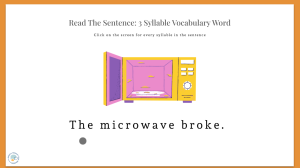
- Sentence-level practice with visual syllable markers

Level 3 – Implicit Teaching
- Roll-and-color activities
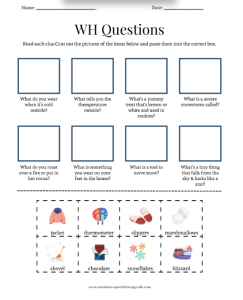
- WH questions
- Bingo and matching games



These materials allow clinicians to adjust support without changing the goal.
Access the Materials
- Members: You can access all multisyllable word materials directly inside the Speech Therapy Talk Membership.
- Non-members: Joining gives instant access to these materials plus 4,000+ additional therapy resources.
Free Monthly Speech & Language Materials
You can also receive free speech and language materials each month, delivered straight to your inbox. This is an easy way to preview the quality and approach of the Speech Therapy Talk Membership.
FREE DOWNLOAD
How to Elicit & Practice the /s/ Sound Simply
Clear cues, high-trial practice, and home-friendly tools to help students produce a strong, accurate /s/ without overplanning or fluff.
