
Apraxia
Apraxia has become a frequently discussed—and sometimes misunderstood—diagnosis. In recent years, it has been applied more broadly than the research supports, which has led to confusion among both parents and professionals.
This page is designed to clarify what childhood apraxia of speech is, how it differs from other speech sound disorders, and how it is typically assessed and treated from a clinical standpoint.

What Is Childhood Apraxia of Speech?
The most widely accepted term is Childhood Apraxia of Speech (CAS).
CAS is a neurologically based speech sound disorder that affects a child’s ability to plan and program the movements required for speech. Importantly, it is not caused by muscle weakness or low tone.
Estimates suggest that approximately 1–2 children per 1,000 present with this disorder (Shriberg et al., 1997).
Key Characteristics
No single feature confirms CAS on its own. Instead, clinicians look for a pattern of characteristics that differentiate it from articulation or phonological disorders.
Motor Planning and Coordination
- Groping or visible struggle during speech attempts
- Difficulty voluntarily initiating speech movements
- Reduced coordination of the articulators, often noted during rapid syllable tasks (e.g., pa-ta-ka)
- Increased difficulty with multisyllabic words
Speech Sound Errors
- Inconsistent productions of the same word or sound
- Errors that increase with length and complexity
- Loss of previously acquired sounds
- Greater success with automatic speech (counting, singing) than with volitional speech
Prosody
- Atypical speech rate
- Reduced stress patterns or a monotone quality
Speech Perception
- Possible difficulty discriminating between speech sounds
Language
- Expressive and receptive language delays are very common and frequently co-occur
At this time, there is no single standardized test that definitively diagnoses CAS. Diagnosis relies on careful clinical judgment supported by multiple assessment components.
Common Assessment Components
- Standardized articulation testing
- Standardized expressive and receptive language testing
- A connected speech or language sample
Clinical Questions to Guide Interpretation
- Speech sound patterns: Are errors typical or atypical? Consistent or inconsistent?
- Language: Is there an accompanying language delay?
- Motor coordination: How does the child perform on rapid syllable repetition tasks?
- Prosody: Is speech rate and stress appropriate?
- Volitional vs. automatic speech: Is spontaneous speech more difficult than automatic tasks?
- Motor development: Are there fine or gross motor delays? Is the child receiving OT or PT services?
Treatment Approaches For Apraxia
Intervention is typically more intensive than traditional articulation therapy and focuses on improving motor planning, sequencing, and accuracy over time.
Motor-Based Treatment Principles
- Use of verbal, visual, and tactile cues
- Emphasis on specific, performance-based feedback
- Gradual fading of cues as accuracy improves
- Explicit teaching of self-monitoring
- Consistent practice across environments
Evidence-Supported and Commonly Used Approaches for Apraxia
- Integral Stimulation – bottom-up imitation with systematic cue fading
- PROMPT – tactile input to support articulatory movement patterns
- Kaufman Approach – structured approximations with systematic progression
- Rapid Syllable Transition Treatment (ReST) – motor learning–based treatment using nonwords
- Dynamic Temporal and Tactile Cueing (DTTC) – intensive, hierarchical cueing for severe cases
- Integrated Phonological Awareness Intervention – addresses speech production and phonological structure
AAC Support
For children with severe communication limitations, AAC:
- reduces frustration
- supports functional communication
- allows speech intervention to continue without limiting language development
Practical Therapy Materials
Effective intervention for CAS requires high-frequency, structured practice that aligns with motor learning principles—without overwhelming the child or clinician.
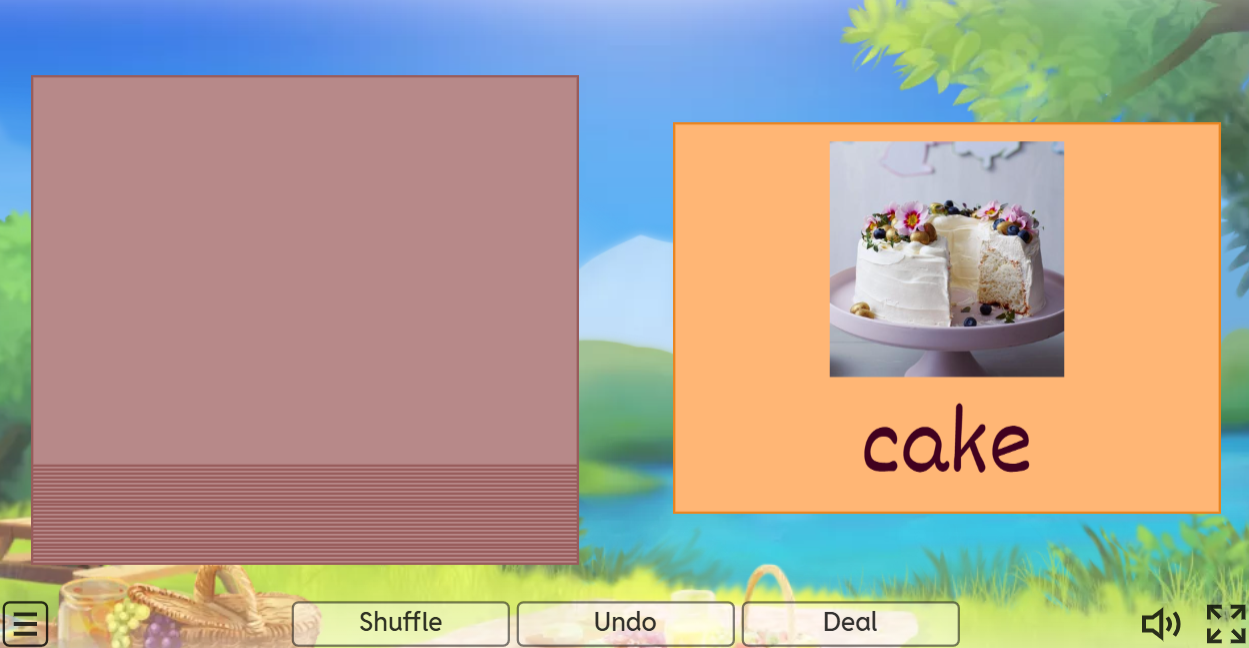
To support this type of therapy, new apraxia-specific materials are now available inside the Speech Therapy Talk Membership, including:
- CV, VC, CVC, and CVCV flashcards designed specifically for motor speech practice
- Carefully selected syllable shapes that support early movement sequencing
- Materials appropriate for DTTC, integral stimulation, and motor-based therapy approaches
- Printable (print) and digital (no-print) formats to allow flexibility across settings
- Simple visuals that keep the focus on movement accuracy, not distraction
These materials are designed to support simultaneous production, direct imitation, delayed imitation, and spontaneous production, depending on the child’s current motor planning level.
These materials are "members only." Members: please access it here!
DTTC Therapy Cheat Sheet
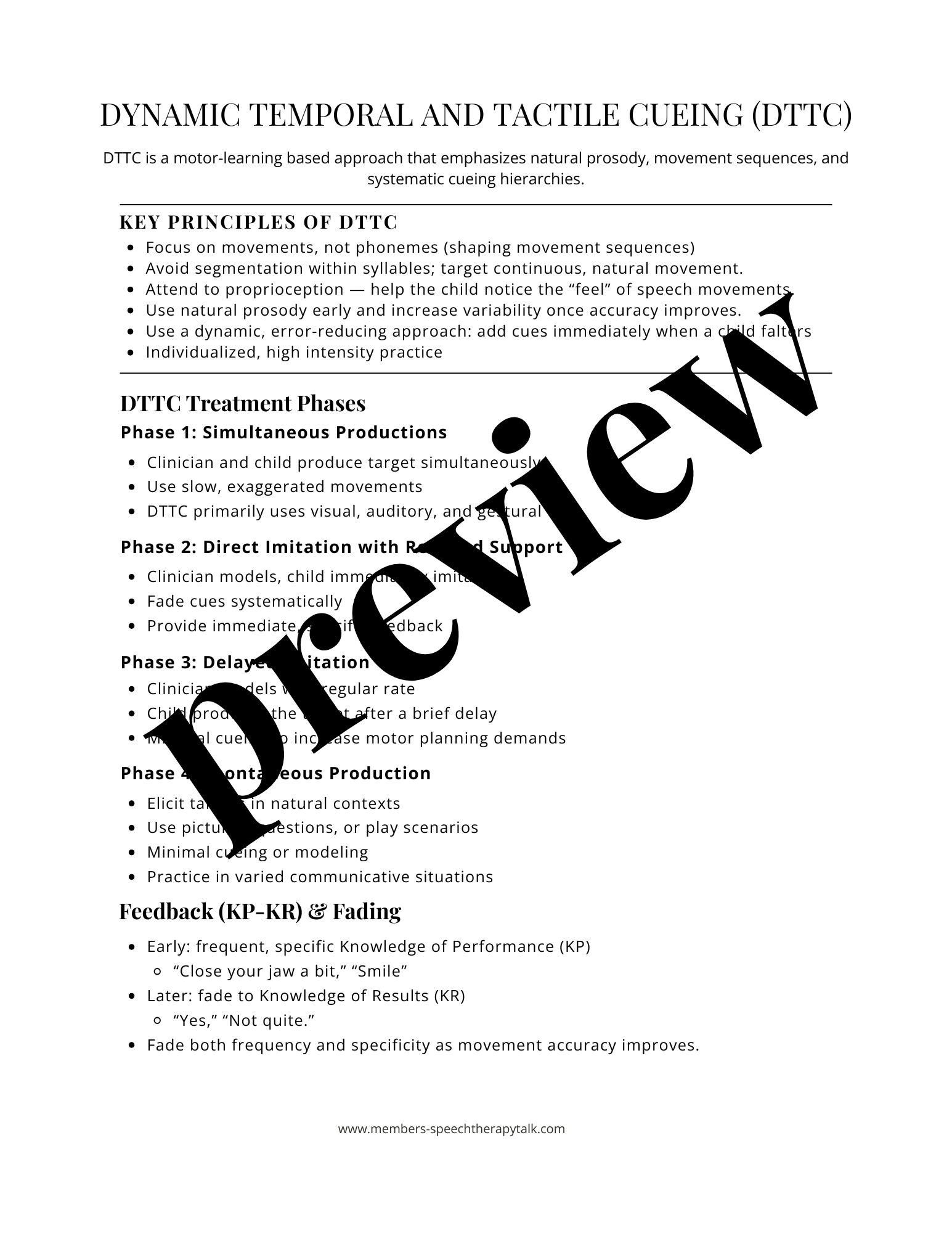
For clinicians using Dynamic Temporal and Tactile Cueing (DTTC), a one-page DTTC cheat sheet is also available for members.
This quick-reference guide includes:
- A clear breakdown of DTTC phases
- Cueing hierarchy examples
- Guidance for fading support appropriately
- Reminders for rate, prosody, and feedback
- A simple structure to support high-trial practice during sessions
The goal is to make it easier to apply DTTC principles consistently during real therapy sessions—without overplanning or second-guessing.
This is "members only." Members: access it here!
Free Monthly Speech & Language Materials
If you’re looking to explore research-aligned articulation materials, you can sign up to receive a free speech or language resource each month, delivered directly to your inbox.
This is a simple way to preview the types of materials included in the Speech Therapy Talk Membership and add something useful to your therapy toolbox—without overwhelm.
FREE DOWNLOAD
How to Elicit & Practice the /s/ Sound Simply
Clear cues, high-trial practice, and home-friendly tools to help students produce a strong, accurate /s/ without overplanning or fluff.
